CALIFORNIA PHENOLOGY
  • Home
  • About
    • People >
      • Faculty & Staff
    • Phenological Research
    • Progress
    • Project Description
    • Project Plan
    • Related Projects
  • Get Involved!
    • 100 Club
    • CCH Meetings
    • Volunteers
  • Resources
    • Data Portal Tutorials >
      • CCH2 Survey Q&A
    • Digitization FAQ / Help page
    • Document Library
    • Equipment Recommendations
    • Expert Identification
    • Funding Opportunities
    • Georeferencing >
      • Georeferencing in CCH2 Training Course
      • Georeferencing in CoGe Training Course
      • Georeferencing Protocols and Guides
      • Georeferencing Webinar
    • Phenological Scoring
    • Sensitive Taxa in CCH2
    • Workflow & Protocols
    • Webinars
  • Research
    • Presentations and Posters
    • Papers and Publications
  • Education
    • Educational Materials
    • Phenology Research Course
    • Media & News
    • Meetings & Upcoming Talks
  • Blog
  • Data Portal

Exploring Plant Phenology Using Herbarium Specimens
Picture
An undergraduate research course developed by the California Phenology Network
Katie Pearson, Susan Mazer, Tadeo Ramirez Parada, Natalie R. Love, and Jenn Yost
We're published! You can find our materials to download on QUBES: ​https://qubeshub.org/publications/1956/3
In this course, students will design and conduct original research to examine the effect of climate on plant phenological events (e.g., flowering) using herbarium specimen data. Students will visualize, clean, and analyze herbarium specimen data and climate data using Excel and R code (through RStudio). Each student will present their research as a scientific report, poster, and/or a lightning talk. During weekly class meetings, important topics and guidance regarding the research process will be discussed.
Picture

Course overview

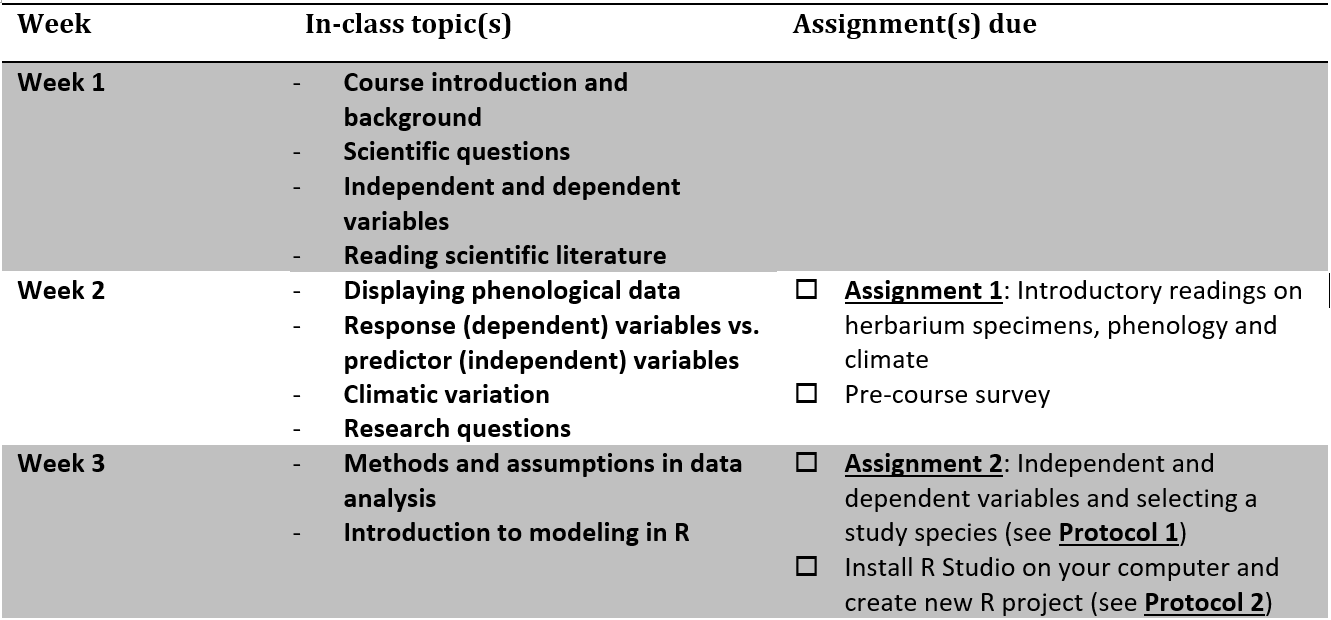
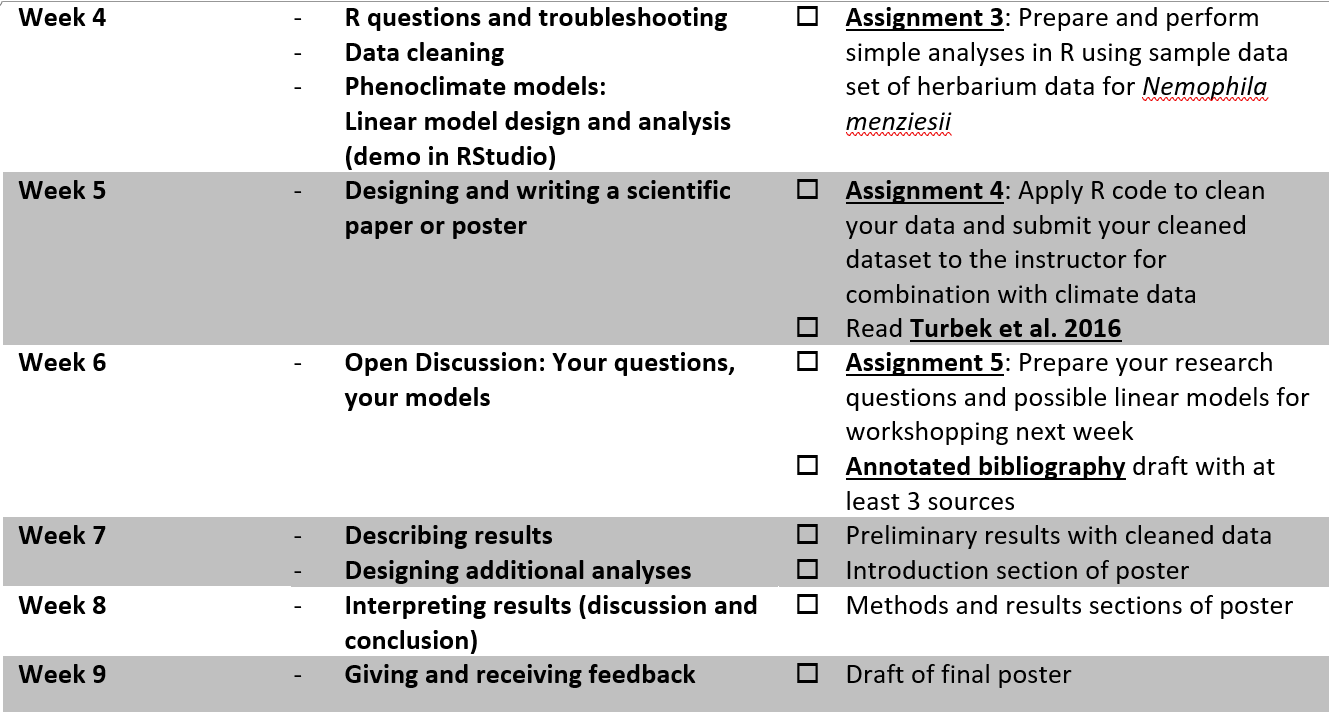
This course was designed for a relatively small class of advanced undergraduate students for a 10-week quarter. No previous experience with R or herbarium specimens is necessary, but students should have basic knowledge about the scientific method and be comfortable reading scientific literature. The weekly schedule of topics is shown below.
Picture
Picture
Picture
Picture
This project made possible by National Science Foundation Award 1802312.
Any opinions, findings, and conclusions or recommendations expressed in this material are those of the author(s) and do not necessarily reflect the views of the National Science Foundation.


Poppy images courtesy of Matt Ritter

Contact Us